Sometimes things happen.
Sometime it could happen that a confused husband was trying to create a gmail account, and in doing so killed mine. Well not quite killed it, in fact took it over. Princess Scarecrow became Hubby do good (from my point of view, not so good). I'm not particularly tech savvy, I couldn't get it back. The only way I can now write here on my own blog I've loved for almost 5 years is to get him to sign me in. Not convenient considering the only time I normally blog is when I'm awake very late at night or in the dark hours of the morning. Frustration and resignation has driven me to start a new blog thelittleblueshacksgarden.blogspot.com.au. It'll take me a while to get it going but I have renewed determination to go with the new blog. Please come visit me there.
I won't abandon this one completely, it's been like a personal creation, one I'm too attached to to let go of completely.
Hope to see you soon

Sunday, June 28, 2015

Friday, July 4, 2014
Garden plans coming to fruition
I was just reading a post on http://wifemothergardener.blogspot.com.au/ about a hedge they've just put in place and I was thinking just how important your long term plans for a garden are. It's the long term plans that help shape what your garden is to become and give your garden it's structure. When we started our garden journey we knew very little about gardening, we watched, fascinated as grass seeds turned into lawn in just six weeks and thought, "wow, let's try a garden". There was no real planing involved, we just bought plants and put them in a sat back and watched. Needless to say, our inexperience led to a lot of frustration and failures, but it was a great learning curve.
Luckily along the way we have made some good long term decisions. Our fences took a lot of our time and money to put in place, but have protected our garden and chickens from neighbourhood dogs. Our wicking beds were a well thought out and planned project to slowly replace vegetable gardens on the ground that baked dry in summer and washed away with the rain.
Our chicken coop, designed to fit our wicking beds and integrate our gardening system has made light work of turning over and replenishing those same beds. Our first hedge along the roadside was planted to hide the untidiness of the original garden beds, but also offers protection from the coastal winds and helps to create a micro climate the plants in the wicking beds thrive on.
Our next hedge is on the house side and will help enclose the vegetable gardens, and give us a prettier view from our newly built pergola. The pergola was a long yearned for structure,marked out countless times with stakes and bits of timber, grinding through the think tank. It now gives us the perfect spot to entertain friends and family, and grow a much wanted grape vine, which will give us shade in the heat of summer and let the warming light in during winter.
My potting area eventuated from my desire to have a place where everything I need is in one spot, now sheltered behind our next great plan, a screen with our first flower garden situated in front. And so the planning goes on...
What are your long term gardening plans you're working towards or what plans have you already seen come to fruition?
Luckily along the way we have made some good long term decisions. Our fences took a lot of our time and money to put in place, but have protected our garden and chickens from neighbourhood dogs. Our wicking beds were a well thought out and planned project to slowly replace vegetable gardens on the ground that baked dry in summer and washed away with the rain.
 |
| Our first wicking gardening bed, showing the initial wicking layer, the hedge growing behind it and the fence. All took a long time to put in place but well worthwhile |
Our chicken coop, designed to fit our wicking beds and integrate our gardening system has made light work of turning over and replenishing those same beds. Our first hedge along the roadside was planted to hide the untidiness of the original garden beds, but also offers protection from the coastal winds and helps to create a micro climate the plants in the wicking beds thrive on.
 |
| My niece retrieving eggs from the chicken coop situated on the first wicking bed we built |
Our next hedge is on the house side and will help enclose the vegetable gardens, and give us a prettier view from our newly built pergola. The pergola was a long yearned for structure,marked out countless times with stakes and bits of timber, grinding through the think tank. It now gives us the perfect spot to entertain friends and family, and grow a much wanted grape vine, which will give us shade in the heat of summer and let the warming light in during winter.
 |
| The pergola under final construction, surrounded by four mini wicking beds which now hold grape vines. You can see my potting area over the back, not the most attractive thing to look at, so new plan now in place |
My potting area eventuated from my desire to have a place where everything I need is in one spot, now sheltered behind our next great plan, a screen with our first flower garden situated in front. And so the planning goes on...
 |
| My parents and niece making the most of our new pergola area. Well worth the wait! |
What are your long term gardening plans you're working towards or what plans have you already seen come to fruition?
Wednesday, July 2, 2014
My July to do list
Welcome to the first day of July! (Well it was the first day, but then I got busy doing other things!!!)
I've been sitting down thinking about everything that needs looking at in the garden and thought I'd share my to do list, maybe it will inspire you too.
* Asparagus need attention. At this time of year a lot of the fronds on the asparagus have died down. Now is the time to chop them all back and re pot or feed them for the coming season. I discovered last year that they respond well to a good layer of new composted and composted manure. I also build up the soil level over them as it tends to drop through the year and they grow thicker growing up through more soil.
*The bananas are looking a little untidy, the wind is up and the dead leaves are blowing the trees around. It's time to prune off the dead leaves and have a look if there are any excess suckers coming up that need removing. Ideally I try to keep just one leader in the group and two followers, any additional take to much energy from them. I've also got a bunch of bananas on one cluster. Removing the flower once the bunch is established also helps conserve energy and prevents visiting bats attracted by the flower nectar. I normally hesitate to do this as I love watching the birds that come daily after the nectar as well, but there's a new flower about to open so the old one can go.
*I'm a bit late for spring bulbs, but I haven't yet missed my opportunity. We'll be putting them into the small wicking beds around our new pergola for a bit of colour.
*The jerusalem artichokes have had their flowers die down a while ago now and have been awaiting me digging them up for eating. This is my first time trying these and I'm excited to see how they've gone. I'll eat some of the tubers and keep some for replanting which can happen now.
*The ginger plants have died down last month, and that's the sign that they are ready to harvest. They can be left in the ground for a while, but they get 'hotter' in flavour the longer they are in, and come spring they will shoot again. As I'm not a fan of really spicy, I tend to dig them up sometime in July. Again, some for me and some for replanting.
*The turmeric is beginning to die down now as well. Related to the ginger family, I'm going to treat them in the same way. Harvest this month and keep some for replanting.
There's probably a whole heap more that will get attention this month, but I figure that's a good starting list.
What's on your to do list this month?
I've been sitting down thinking about everything that needs looking at in the garden and thought I'd share my to do list, maybe it will inspire you too.
* Asparagus need attention. At this time of year a lot of the fronds on the asparagus have died down. Now is the time to chop them all back and re pot or feed them for the coming season. I discovered last year that they respond well to a good layer of new composted and composted manure. I also build up the soil level over them as it tends to drop through the year and they grow thicker growing up through more soil.
*The bananas are looking a little untidy, the wind is up and the dead leaves are blowing the trees around. It's time to prune off the dead leaves and have a look if there are any excess suckers coming up that need removing. Ideally I try to keep just one leader in the group and two followers, any additional take to much energy from them. I've also got a bunch of bananas on one cluster. Removing the flower once the bunch is established also helps conserve energy and prevents visiting bats attracted by the flower nectar. I normally hesitate to do this as I love watching the birds that come daily after the nectar as well, but there's a new flower about to open so the old one can go.
 |
| Banana flower needing removing to allow bananas to put their energy into the bunch. |
 |
| Spring bulbs I'm hoping to get planted early this month. |
*I'm a bit late for spring bulbs, but I haven't yet missed my opportunity. We'll be putting them into the small wicking beds around our new pergola for a bit of colour.
*The jerusalem artichokes have had their flowers die down a while ago now and have been awaiting me digging them up for eating. This is my first time trying these and I'm excited to see how they've gone. I'll eat some of the tubers and keep some for replanting which can happen now.
*The ginger plants have died down last month, and that's the sign that they are ready to harvest. They can be left in the ground for a while, but they get 'hotter' in flavour the longer they are in, and come spring they will shoot again. As I'm not a fan of really spicy, I tend to dig them up sometime in July. Again, some for me and some for replanting.
*The turmeric is beginning to die down now as well. Related to the ginger family, I'm going to treat them in the same way. Harvest this month and keep some for replanting.
There's probably a whole heap more that will get attention this month, but I figure that's a good starting list.
What's on your to do list this month?
Monday, June 30, 2014
Harvesting now
It's been a busy time for me since my last post and a busy time in the garden too, so time for a quick update.
We've been continuing to harvest eggplants, the four eggplant seedlings I put in last year have been incredibly prolific and are still producing an abundant amount. Our tomatoes ( I think they were called something like Marmande?) bigger than our usual cherry tomatoes have started to produce but we've lost heaps to big green caterpillars that seem to find them irresistable. In an effort to help minimise the loss I ordered a harvest protection kit from Green Harvest. What a great kit! (but more about that later). Our chillies have been really productive and in general things are doing well.
 |
| The cucumbers came to a swift caterpillar eaten end and we're removed in defeat! |
 |
| Eggplants (Aubergines) still going strong, abundant chillies and tomatoes |
 |
| A few bits grabbed for a quick dinner. Still harvesting leeks, kale, asian greens, basil and heads forming on my first successful broccoli. |
Winter vegetables like broccoli are just coming into their own and the garden is planted up with lots of kale and some asian greens as well. The peas are now plentiful as well, but unfortunately they even didn't make it into a photo, let alone the kitchen.
What's doing well in your garden right now?
Thursday, February 27, 2014
Trial mini wicking bed
Our large wicking beds have been such a success for us, but are costly and time consuming to make. With the recent complete failure of my pumpkin seeds planted into a normal garden bed, to turn into anything more than weedy, bug infested miniaturised versions of what they should have been due to what I believe is just a lack of water I decided to try to produce a quick, just for pumpkins that will sprawl all over the ground, mini wicking bed. For those not yet familiar with wicking beds they are just a garden bed that has a reservoir or catchment area under them that enables them to hold water. This water naturally wicks its way upwards through the soil providing a ready supply of water to plant roots.
I have been inspired recently by the blue shell shaped plastic sand pits/swimming pools that you can buy from Bunnings. A neighbour had been using one as a makeshift pond for some ducks and ducklings that had made their way into her backyard. With an approximate diameter of about 3 foot or 90cm and at only $12.50 they seemed a good size and value for a purpose made wicking bed.
With my large wicking beds we needed to find a way to waterproof the bases to hold water and then needed a bed of sand to protect the plastic sheeting used. The shell being hard plastic meant these steps weren't needed. As our yard is on quite a pronounced two way slant and I wanted the pumpkins to base their roots here and know the vines will spread out across the yard I dug a hole to partially submerge the shell and to make sure it sat perfectly flat using a spirit level.
From there I wanted to trial using an alternative to the rock water holding sections we'd used in the large beds. The rocks were back breaking work to shovel into the large beds and because of their rough edges it meant the necessity to once again protect the plastic linings in the originals with more sand, again more shovelling and the use of heaps of geotex fabric (fabric used in ground work which allows water to pass through but not soil or sand) to keep the water holding area between the rocks free of sand and dirt to allow it to hold as much water as possible. Our alternative was socked Ag pipe left over from a drainage system my parents had put in. Ag pipe is used in drainage systems, it's just black piping with slots cut in it to allow water to drain out. The "socking" on the pipe we used means that dirt doesn't get into it. Thus allowing us a water holding pocket without needing to use geotex to keep the sand and dirt out. We wound this into a tight coil using some wire to keep it held together, then threw a couple of rocks in to the holes around the edges to ensure as much water holding capacity as possible. An outlet pipe is added at this time to allow any excess water to be drain away and to prevent the whole shell from just filling up with rain or over watering and the plants drowning. I recommend using a small piece of weed mat wrapped around the end of the pipe on the inside, once again just to stop the loss of any dirt as the water flows out. We used some left over grey water pipe as the fill tube to take water down to the larger pipe. This isn't strictly necessary as you could just water the soil and it will drain down itself but using the pipe puts the clean water right where it needs to be. This was then topped with some left over weed mat to minimise the above layers getting down into the water collection area (not as good as using geotex but we had none on hand, and it's fairly expensive and best bought in large rolls which we aren't needing just yet). This is then topped with some sand for it's great wicking properties and then soil added.
As pumpkins are heavy feeders we used part of the sandy loamy soil we'd dug out to bury the shell, but mostly the larger part a rich dark compost and part composted cow manure hence the very dark soil in the image above.
For the first couple of weeks until the seedlings came up each time the chooks were out we used a matching shell lid to keep them from digging, but relented and put a temporary wire fence around it as the chooks were way too interested in that dark soil.
In went a few Marina Di Choggia pumkin seeds from Green Harvest (lovely warty looking pumpkins) and in a few weeks we can safely say all seems to be going well. In fact it seemed to hold water so well I couldn't resist throwing in a couple of lettuce seedlings to take up a bit of space while the pumkins got underway.
The final verdict, I'm really pleased. It holds a tremendous amount of water due to the large space provided by the Ag pipe (in fact when I fill it after 5 very hot days in will take approximately 30 litres of water before the overflow kicks in). It was very easy to do and the cost was minimal courtesy of some leftover grey water pipe and Ag pipe from previous jobs. The Ag pipe works so well and holds so much more water for the volume that I think we will use it in the next large wicking bed instead of the large quantities of rocks we normally use.If you're having trouble with dry garden beds I'd really suggest giving this easy wicking bed a go.
I have been inspired recently by the blue shell shaped plastic sand pits/swimming pools that you can buy from Bunnings. A neighbour had been using one as a makeshift pond for some ducks and ducklings that had made their way into her backyard. With an approximate diameter of about 3 foot or 90cm and at only $12.50 they seemed a good size and value for a purpose made wicking bed.
With my large wicking beds we needed to find a way to waterproof the bases to hold water and then needed a bed of sand to protect the plastic sheeting used. The shell being hard plastic meant these steps weren't needed. As our yard is on quite a pronounced two way slant and I wanted the pumpkins to base their roots here and know the vines will spread out across the yard I dug a hole to partially submerge the shell and to make sure it sat perfectly flat using a spirit level.
 |
| Shell showing spirit level, coiled socked Ag pipe and stones to fill gaps. |
From there I wanted to trial using an alternative to the rock water holding sections we'd used in the large beds. The rocks were back breaking work to shovel into the large beds and because of their rough edges it meant the necessity to once again protect the plastic linings in the originals with more sand, again more shovelling and the use of heaps of geotex fabric (fabric used in ground work which allows water to pass through but not soil or sand) to keep the water holding area between the rocks free of sand and dirt to allow it to hold as much water as possible. Our alternative was socked Ag pipe left over from a drainage system my parents had put in. Ag pipe is used in drainage systems, it's just black piping with slots cut in it to allow water to drain out. The "socking" on the pipe we used means that dirt doesn't get into it. Thus allowing us a water holding pocket without needing to use geotex to keep the sand and dirt out. We wound this into a tight coil using some wire to keep it held together, then threw a couple of rocks in to the holes around the edges to ensure as much water holding capacity as possible. An outlet pipe is added at this time to allow any excess water to be drain away and to prevent the whole shell from just filling up with rain or over watering and the plants drowning. I recommend using a small piece of weed mat wrapped around the end of the pipe on the inside, once again just to stop the loss of any dirt as the water flows out. We used some left over grey water pipe as the fill tube to take water down to the larger pipe. This isn't strictly necessary as you could just water the soil and it will drain down itself but using the pipe puts the clean water right where it needs to be. This was then topped with some left over weed mat to minimise the above layers getting down into the water collection area (not as good as using geotex but we had none on hand, and it's fairly expensive and best bought in large rolls which we aren't needing just yet). This is then topped with some sand for it's great wicking properties and then soil added.
 |
| Feeder pipe to the top left and outflow pipe to the bottom right. Shell filled and ready to go. |
For the first couple of weeks until the seedlings came up each time the chooks were out we used a matching shell lid to keep them from digging, but relented and put a temporary wire fence around it as the chooks were way too interested in that dark soil.
In went a few Marina Di Choggia pumkin seeds from Green Harvest (lovely warty looking pumpkins) and in a few weeks we can safely say all seems to be going well. In fact it seemed to hold water so well I couldn't resist throwing in a couple of lettuce seedlings to take up a bit of space while the pumkins got underway.
 |
| Little garden growing well. You can see from the grass around it just how dry it's been here. |
Tuesday, February 25, 2014
In my garden today
Today in the garden I was pleased to see that my chilli bush, not the small birdseye chillies, but slightly larger less hot, chilli bush was flowering again and so too were my capsicum plants I'd started from seed from Green Harvest. The chilli bush in wicking bed number 4, the same bed as the capsicums has already got some chillies forming on it.
 |
| A rather blurry picture of the chilli flowers |
Also in flower is my smaller mandarin, which hasn't yet fruited. The other older one has fruit on it at the moment and had fruit last year as well, not much but enough that we turned it into jam.
 |
| The mandarin flowering. |
Also in flower today was one of the turmeric plants. This plant and a few others has been grown from tubers bought last year from a farmers market. I couldn't believe my luck at the time. I'd paid nearly $20 for a turmeric plant from the nursery a couple of months before, and for $3 from the market I got a small bag full of sad looking tubers. Amazingly enough most of them came up, even some that I'd accidentally dropped in the grass managed to survive and grow. This one was just tossed in a half empty pot with an almost dead ginger plant, and now with a little water and love, I have a flowering plant.
 |
| Turmeric flower. |
And lastly still flowering well and still producing well, our eggplants in bed number two. After we'd picked what I thought would be the last of the eggplants (aubergines for the non Australian), I cut back any scrappy dead looking leaves, gave the plants a tidy up and then top dressed their soil with more compost. And then they started flowering again, and producing more eggplants for us to gobble,
 |
| Eggplant flowering after being cut back and it's soil redressed with a good amount of compost. |
 |
| Eggplant almost ready for harvest. |
And last but not least we also picked some fruit from our lemonade tree. The yellow looked fabulous in the bowl with the purple eggplants. Now we just have to make plans for eating it.
 |
| Add caption |
Saturday, February 22, 2014
New additions
We've welcomed a new addition to the garden, or more precisely the footpath.
We planted out gardens on the footpath going back a while now in an effort to hide the bottom of an unsightly fence. Our fence due to the slope of the land had gaps underneath the panels on the bottom right side, gaps big enough a chook could fit under, or a smallish dog, so we put scraps of building material under them to stop these gaps being used as a unwanted shortcut by either. This does the job, but doesn't look the best from the outside footpath, so a garden was built along the fence line to eventually, once the plants grow, hide it. This garden incorporates mostly things which I could get for free or for very little at the time, including some pineapples (I love the way these have quite an architectural look about them when they get bigger) and different types of grasses.
At the same time, a garden bed was established around some largish eucalypts and a she-oak growing on the footpath which I wanted to keep but were killing off the grass around their bases and looking very untidy. At the time our neighbours were selling their home and we wanted it to look as nice as possible for their auction day. It seemed fate when we were able to get a pile of free woodchip bark from a friend of a friends felled tree and met with our desire at the time to get a little bit of a native garden going to help attract small native birds to our garden. So with all the right ingredients in place at once our first little native garden got started.
However I digress...With our regularly now going out to check on how these plants are going and do some watering, parts of the lawn out there are starting to look really inviting. However our brutal summer sun has really dried out the high side which has no shade throughout the day. We'd been thinking about planting out some other natives to created a bit of a shade area here (and I also have been secretly plotting for hubby to build a bench seat out here for passersby to sit, rest, enjoy the view through the trees to the water and/or have a chat). However the decision came about just through chatting as we do about what other plants we'd like to have and where we might fit them in our ever decreasing backyard space.
Olives.
We've always both wanted olive trees, but as we didn't know much about them and hadn't yet in our heads been able to envision the perfect spot, we'd held off. Now I've never been shy about putting plants on the footpath, (there was a couple of summers ago when my entire footpath to the roadway was covered in sprawling pumpkin vines), but I didn't want to put plants out here where all my love and devotion resulted in fruits that would end up being picked prematurely by passersby. (Yes, we did loose some pumpkins). We figured olives would only be inviting to those that really know what to do to make them edible, and we wouldn't mind so much in sharing under those circumstances.
Now I had been looking around at olive trees at the nursery and at Bunnings, and had done some limited research on the type of trees I wanted. The plan was to go with Manzilla's originally, but googling to find less expensive options brought the Helena Olive to our attention (not to be confused with the St Helena Olive which is now extinct).
This is the blurb from inside the swing card attached to these olive trees: " St Helena Island is a heritage National Park off the coast of Brisbane, Australia. It was a high security prison from 1867 to the 1920's and then a prison farm until its closure in 1932.
The original olive tree was planted in the late 1800's after being brought to the island from Europe by a visiting magistrate. Your are purchasing a 3rd generation heritage tree which has a history of producing exceptional fruit and award winning olive oil."
Apparently the prison was to be self sufficient and produced not only all their own food, but had an olive grove which sold award winning olive oil back to Italy.
Once again it just seemed meant to be. Here was a type of olive tree that had been proven on an island off of Brisbane. Perfect, a sun loving, drought tolerant, and island suitable tree. And just like that, two new trees have found a home with us.
From other researching I've done, it would seem we've got a long wait ahead of us before seeing our first olives, about seven years, but I'm sure it will be worth it.
We planted out gardens on the footpath going back a while now in an effort to hide the bottom of an unsightly fence. Our fence due to the slope of the land had gaps underneath the panels on the bottom right side, gaps big enough a chook could fit under, or a smallish dog, so we put scraps of building material under them to stop these gaps being used as a unwanted shortcut by either. This does the job, but doesn't look the best from the outside footpath, so a garden was built along the fence line to eventually, once the plants grow, hide it. This garden incorporates mostly things which I could get for free or for very little at the time, including some pineapples (I love the way these have quite an architectural look about them when they get bigger) and different types of grasses.
At the same time, a garden bed was established around some largish eucalypts and a she-oak growing on the footpath which I wanted to keep but were killing off the grass around their bases and looking very untidy. At the time our neighbours were selling their home and we wanted it to look as nice as possible for their auction day. It seemed fate when we were able to get a pile of free woodchip bark from a friend of a friends felled tree and met with our desire at the time to get a little bit of a native garden going to help attract small native birds to our garden. So with all the right ingredients in place at once our first little native garden got started.
 |
| Our little native garden. The plants don't look much yet but in time they'll grow. |
However I digress...With our regularly now going out to check on how these plants are going and do some watering, parts of the lawn out there are starting to look really inviting. However our brutal summer sun has really dried out the high side which has no shade throughout the day. We'd been thinking about planting out some other natives to created a bit of a shade area here (and I also have been secretly plotting for hubby to build a bench seat out here for passersby to sit, rest, enjoy the view through the trees to the water and/or have a chat). However the decision came about just through chatting as we do about what other plants we'd like to have and where we might fit them in our ever decreasing backyard space.
Olives.
We've always both wanted olive trees, but as we didn't know much about them and hadn't yet in our heads been able to envision the perfect spot, we'd held off. Now I've never been shy about putting plants on the footpath, (there was a couple of summers ago when my entire footpath to the roadway was covered in sprawling pumpkin vines), but I didn't want to put plants out here where all my love and devotion resulted in fruits that would end up being picked prematurely by passersby. (Yes, we did loose some pumpkins). We figured olives would only be inviting to those that really know what to do to make them edible, and we wouldn't mind so much in sharing under those circumstances.
Now I had been looking around at olive trees at the nursery and at Bunnings, and had done some limited research on the type of trees I wanted. The plan was to go with Manzilla's originally, but googling to find less expensive options brought the Helena Olive to our attention (not to be confused with the St Helena Olive which is now extinct).
This is the blurb from inside the swing card attached to these olive trees: " St Helena Island is a heritage National Park off the coast of Brisbane, Australia. It was a high security prison from 1867 to the 1920's and then a prison farm until its closure in 1932.
The original olive tree was planted in the late 1800's after being brought to the island from Europe by a visiting magistrate. Your are purchasing a 3rd generation heritage tree which has a history of producing exceptional fruit and award winning olive oil."
Apparently the prison was to be self sufficient and produced not only all their own food, but had an olive grove which sold award winning olive oil back to Italy.
Once again it just seemed meant to be. Here was a type of olive tree that had been proven on an island off of Brisbane. Perfect, a sun loving, drought tolerant, and island suitable tree. And just like that, two new trees have found a home with us.
From other researching I've done, it would seem we've got a long wait ahead of us before seeing our first olives, about seven years, but I'm sure it will be worth it.
 |
| One of our new Helena Olives. |
Thursday, February 20, 2014
Today I noticed:
Our cherry trees at the front door were in flower again just a couple of weeks ago. I'm not sure what set them off flowering again but I wondered at the time whether it would mean we'd see more cherries appear. We'd gotten three cherries off the larger of the two trees, the first ever back on the 14th of December last year. And now today I noticed that the cherry tree had another two fruit on it. There may yet be more but I didn't get a chance to have a look through the tree to see if there were any more. I know from last time that the cherries are virtually impossible to spot while they are still green, it's not until they turn red that they become obvious to see.

And while waiting for the ferry I normally like to look in the water to see what fish are around the jetty. Today I got quite a surprise when I spotted a foreign looking bright orange and black striped fish with large fins. From my investigations on the web it would appear it's a Teira Batfish of Indonesian origin.

From LiveAquaria.com , I obtained the following information on them;
"Also known as the Longfin Batfish, Longfin Platax, and Round-faced Batfish, the body and fins have wide vertical alternate bands of black and a pale yellow or tan.
And while waiting for the ferry I normally like to look in the water to see what fish are around the jetty. Today I got quite a surprise when I spotted a foreign looking bright orange and black striped fish with large fins. From my investigations on the web it would appear it's a Teira Batfish of Indonesian origin.
From LiveAquaria.com , I obtained the following information on them;
"Also known as the Longfin Batfish, Longfin Platax, and Round-faced Batfish, the body and fins have wide vertical alternate bands of black and a pale yellow or tan.
A relatively easy Batfish to keep, the Teira Batfish can grow to an impressive size of 24 inches, measuring from the tip of the dorsal to the tip of the anal fin. Not a good reef dweller, it will eat many types of sessile invertebrates including corals and anemones. The Teira needs a minimum of a 360 gallon tank with plenty of unobstructed room to swim. As with all Batfish, the Teira is susceptible to ich.
A varied diet of meaty foods such as shrimp, scallops, vitamin-enriched brine shrimp and frozen herbivore preparations is recommended, and it is best to feed it three times a day. This species of Batfish can become very tame, sometimes feeding from its owner's fingers."
I doubt this one is a local, I think somehow it's made it's way from someone's tank into our Redland bay. I don't know how long it will last though as it wasn't looking all that healthy when I saw it.
Tuesday, February 18, 2014
Things of note
Today I noticed:
* that our loquat tree has started to flower. I'm really excited to see this as it's the first time since we transplanted it out of it's pot and into it's final position. For anyone who doesn't know what a loquat is they are well worth trying. Ours was producing fruit while in it's pot within a couple of years. The fruit is kind of egg shaped and when ripe a lovely apricot colour and best of all tastes very good. They also seem very easy to grow from seed. I've got some seedlings underway from fruit from this tree.
*that the tadpoles I'd seen turned into very small black frogs are in fact seemingly turning into lovely small green ones, I found a whole heap of them on the leaves of the water plants in that pond. This is a tremendous relief because I had seen my second only cane toad in the yard as I was walking back late from the beach one night and I had started to wonder. They are well camouflaged amongst the pond's greenery, well enough that hopefully the kookaburras who take the occasional baths here won't notice. I have noticed an increase in the number of frogs around both ponds, I don't know whether the small LED light I placed in each pond is attracting them, or perhaps a supply of insects by night for them to feed on, or maybe it's just the dry summer heat is attracting them to stay closer to water.
*Another banana tree has just come in to flower. That will be the third one, as another two are well under way with bananas gaining size each time I see them.
* I spotted a small praying mantis, another "good" bug for the garden. After reading about good bugs versus bad bugs I like to celebrate every new good bug that arrives. Every insect brings a better diversity to the garden and an opportunity to fight off the bad bugs without resorting to chemicals in a garden where I'm trying to remain as organic as possible.
* that our loquat tree has started to flower. I'm really excited to see this as it's the first time since we transplanted it out of it's pot and into it's final position. For anyone who doesn't know what a loquat is they are well worth trying. Ours was producing fruit while in it's pot within a couple of years. The fruit is kind of egg shaped and when ripe a lovely apricot colour and best of all tastes very good. They also seem very easy to grow from seed. I've got some seedlings underway from fruit from this tree.
 |
| Loquat tree in flower |
 |
| You can see three frogs on the stalks here and one on the leaf above. |
 |
| Look how many are hiding amongst the leaves here. |
* I spotted a small praying mantis, another "good" bug for the garden. After reading about good bugs versus bad bugs I like to celebrate every new good bug that arrives. Every insect brings a better diversity to the garden and an opportunity to fight off the bad bugs without resorting to chemicals in a garden where I'm trying to remain as organic as possible.
 |
| Can you spot it? It's almost invisible against the bark on the tree trunk. |
Sunday, January 19, 2014
Branching Out
My inspiration for starting this blog originally came from all the fabulous blogs I'd stumbled onto while looking for information to help me start my gardening journey. It's five years on now, and some of those blogs I've followed almost daily, others I've somehow found just once or twice just by following links that lead me there and then I've never been able to find them again. Just yesterday while following links I found my way to Bloglovin, a one stop shop for all the blog surfing you could want. Already this morning I've had updates sent to my mobile to let me know which blogs I've chosen to follow have updated postings.It makes it so easy to keep all the blogs you'd like to follow in one place.So very easy. So I've decided I'm going to put my blog on there as well, so for anyone out there who wants to follow my very sporadic postings, you too can get a email to say, she's finally put up another post!
Here's the link, Follow my blog with Bloglovin, enjoy the surfing!
Here's the link, Follow my blog with Bloglovin, enjoy the surfing!
Tuesday, January 14, 2014
Quick daily update
Today was a great day in the garden! Not only did we get the lawns raked, and all the leaves onto the new leaf pile, we also got them mowed, so everything looks really tidy.
The best news of the day was the discovery this morning of not only more tadpoles in the new pond, but also the discovery of new baby frogs. They are little tiny black ones, smaller then the nail on my little finger. I'm imagining they'll grow into the lovely little green frogs we get at the other pond, and this was almost certainly confirmed by the discovery of one of these same green frogs amongst the greenery. Fingers crossed.
We're going on holidays and won't be back for a week so I wanted to ensure the wicking beds are all filled and that most of the plants the need watering every couple of days have been moved to be in a obvious place so that my parents can water them easily while I'm away.
I hand pollinated the first female squash flower today, so with some luck, in a couple of weeks we should be enjoying home grown squash. The large cherry tomato in bed 3 has been cut right back, removing all the dead wood to see if I can get another flush and in doing this I've also been able to get right into the beans and cut off all the old ones to also allow for another good crop to follow.
Last but not least for pumpkin seeds planted into the new seashell wicker bed. Unfortunately no photos today, but after reading another blog recently that didn't have any photos I figured that the occasional post without images will at least keep things moving when I'm too tired to do anything else.
The best news of the day was the discovery this morning of not only more tadpoles in the new pond, but also the discovery of new baby frogs. They are little tiny black ones, smaller then the nail on my little finger. I'm imagining they'll grow into the lovely little green frogs we get at the other pond, and this was almost certainly confirmed by the discovery of one of these same green frogs amongst the greenery. Fingers crossed.
We're going on holidays and won't be back for a week so I wanted to ensure the wicking beds are all filled and that most of the plants the need watering every couple of days have been moved to be in a obvious place so that my parents can water them easily while I'm away.
I hand pollinated the first female squash flower today, so with some luck, in a couple of weeks we should be enjoying home grown squash. The large cherry tomato in bed 3 has been cut right back, removing all the dead wood to see if I can get another flush and in doing this I've also been able to get right into the beans and cut off all the old ones to also allow for another good crop to follow.
Last but not least for pumpkin seeds planted into the new seashell wicker bed. Unfortunately no photos today, but after reading another blog recently that didn't have any photos I figured that the occasional post without images will at least keep things moving when I'm too tired to do anything else.
Sunday, October 27, 2013
Time flies, Instant gratification to patience, all in a garden
I can’t believe it’s been so long since I've written here.
I've gone to a couple of times, but think to myself, that the day to day is not
that exciting, or I don’t really have great photos to put with it. It’s a shame
I've wasted all those opportunities to note down what I've been doing in the
garden, because I know I’ll look back next year for guidance on when to cutback
the asparagus and re pot them, or when I gave the blueberries fertilizer that’s
made them look so much better this year then ever before, or when did I first
add those plants to my garden.
When I think back there has been so much going on. I did my
first ever purchase on the internet, I know, I'm probably a little behind the
times, but wow, did this convert me! Of course the me of six years ago would
have probably bought shoes, clothes or make-up, but I'm proud to say the me of
now, made my first on-line trip to Green Harvest, and as I lay there in bed,
drooling over their plants (it was their description of the Yacon or Peruvian
Ground Apple that finally got too much for me to hold back!) I made the
decision that it was worth it to give it a try. Well, that purchase won’t be my
last! The glee of instant gratification! I was so excited when my box of goodies arrived and couldn't wait to get
them out and into the garden. I was able to buy so many exciting things and it
was just at the right time for them to be planted, the start of spring.
So
what did I buy? Well, the Peruvian ground apples for starters, two big bulbs,
which will produce sweet potato type tubers that will apparently taste
something like a cross between an apple and watermelon. To this I added:
Jerusalem Artichokes, Duck Potatoes, Chinese Artichokes (they looked so unusual
I just had to have them), Queensland Arrowroot, and then some great packets of
seeds.
So they're all now well established in their starter pots. The Peruvian Ground Apple has now made it's way into a permanent spot in the garden, and now, patience is all that's required, for the next 7 months!
So they're all now well established in their starter pots. The Peruvian Ground Apple has now made it's way into a permanent spot in the garden, and now, patience is all that's required, for the next 7 months!
 |
| Chinese Artichokes growing in their pot. They do suggest that they can become quite invasive, and obviously any tubers left in the ground are likely to sprout, so these will remain in pots, although they are due for an upsize. |
 |
| Chinese Artichokes: I borrowed this image from Green Harvest as I didn't think to take a picture of them before I planted them, but you can see why I had to have them! |


Saturday, May 4, 2013
April
I know it's a little late, but I thought I'd do an overall for what has happened each month. That way I can look back and hopefully get a little planning in for next year. It's been a good month in the little blue shack. Alice and Wendy my two new chooks came to live with us.
April is a great month for fabulous sunset shots, I don't know that I shared many with you, but I took heaps of photos.
The annual canoe race has inspired my aunt and uncle who are keenly involved with the dragon boat racing scene, hopefully with their connections we'll have something extra special happening this time next year.
Hubby started the deck, well at least laid out the boards that we had inherited from my brother when he sold his last home and removed a temporary deck that wasn't council approved. No deck yet, but that timber is now being put to great use and I'll have an unveiling shortly.
In the garden construction of new beds is underway. The ground has been levelled for the top two gardens near the bananas and the bottom layer of the new wicker beds have been put in place.
Green caterpillars have taken over the garden, they are eating the tomatoes, the kale, parsley, hibiscus, rosellas and basically I've found them on most green things. The tomatoes that haven't been gobbled by the caterpillars in wicker bed number two are just turning red and I picked the first of them a couple of days ago.
I'm still getting a few passionfruit from both the dark and yellow passionfruits.
The mandarin tree has fruit all over it which although small are edible (actually quite sweet) compared to last years bitter offering that we turned into jam.
I harvested the last of the peanuts as they were dying back under the overgrown tomatoes. Note to self, find a sunny spot for these guys next year, a special place all of their own.
The asparagus is just starting to die back and is browning off, but still sending up the occassional green shoot, I know that last year I read that I should just cut them off (apparently they don't die back completely in our climate) and get them ready for replanting, but I don't think that was until winter.
The water chestnuts are almost ready for harvest, their leaves almost completely dead now.
April is a great month for fabulous sunset shots, I don't know that I shared many with you, but I took heaps of photos.
The annual canoe race has inspired my aunt and uncle who are keenly involved with the dragon boat racing scene, hopefully with their connections we'll have something extra special happening this time next year.
Hubby started the deck, well at least laid out the boards that we had inherited from my brother when he sold his last home and removed a temporary deck that wasn't council approved. No deck yet, but that timber is now being put to great use and I'll have an unveiling shortly.
In the garden construction of new beds is underway. The ground has been levelled for the top two gardens near the bananas and the bottom layer of the new wicker beds have been put in place.
Green caterpillars have taken over the garden, they are eating the tomatoes, the kale, parsley, hibiscus, rosellas and basically I've found them on most green things. The tomatoes that haven't been gobbled by the caterpillars in wicker bed number two are just turning red and I picked the first of them a couple of days ago.
I'm still getting a few passionfruit from both the dark and yellow passionfruits.
The mandarin tree has fruit all over it which although small are edible (actually quite sweet) compared to last years bitter offering that we turned into jam.
I harvested the last of the peanuts as they were dying back under the overgrown tomatoes. Note to self, find a sunny spot for these guys next year, a special place all of their own.
The asparagus is just starting to die back and is browning off, but still sending up the occassional green shoot, I know that last year I read that I should just cut them off (apparently they don't die back completely in our climate) and get them ready for replanting, but I don't think that was until winter.
The water chestnuts are almost ready for harvest, their leaves almost completely dead now.
Sunday, April 28, 2013
Lazy days
Yesterday was a lovely autumn day, not too hot, not cold, sun shining and no rain. Just perfect. I made an early start in the garden, letting my chickens out early for a run around, and getting them to help me look for green caterpillars on my tomatoes. It was so cute watching them climb into the garden, something I would normally freak out a little over, but there's not much they can wreck under the tomatoes that hasn't already been decimated by the green invasion. They were jumping up and down trying to reach caterpillars after I caught the first few, which became snacks for the girls.
My Mum and aunt called in early to remind me it was the annual canoe race and I joined them to watch the start, gobbled down a yummy bacon and egg breakfast burger made by the local boat club volunteers and watched the first, second and third place takers arrive in after circumnavigating the island. In all a very relaxed way to spend a Sunday.
My Mum and aunt called in early to remind me it was the annual canoe race and I joined them to watch the start, gobbled down a yummy bacon and egg breakfast burger made by the local boat club volunteers and watched the first, second and third place takers arrive in after circumnavigating the island. In all a very relaxed way to spend a Sunday.
 |
| Some of the competitors warming up while waiting for the start. |
 |
| The race kicked off with a frenzy of oars. |
 |
| First, second and third place warming down after finishing. |
 |
| Mum and my niece enjoying a stroll together on the beach waiting for the race sta |
Friday, April 26, 2013
Invasion
After all the rain we've had I was fascinated by these mushrooms/toadstools??? that popped up in the local park. There were so many of them I just had to take a quick few pics. I don't know what type they are, please let me know if you do. They certainly don't look edibly appealing, but make an interesting find on a morning walk.


And as the rain had settled into a pattern of overnight showers and beautiful days, everything in the garden blossomed and thrived, including the bugs. Bad bugs, but they also herald the arrival of good bugs, and some bugs, I'm not really sure where they fit in.
As you can see, caterpillars were a large part of my problem, but they weren't alone.
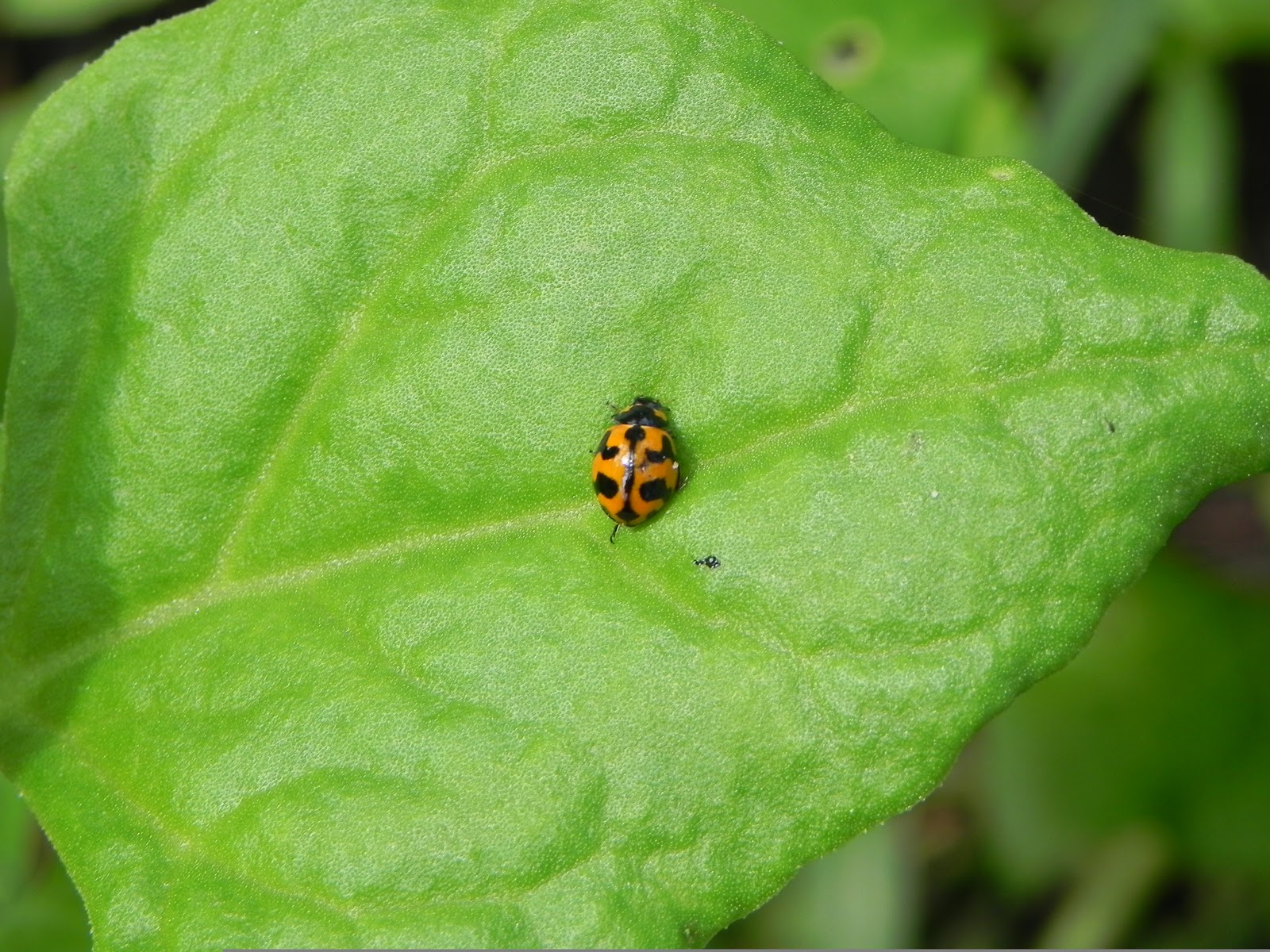
 Aphids have taken an incredible liking to my snake beans. I never had this problem last year and I was getting desparate enough to reach for the pyrethrum, until I saw the lady beetles arrive.
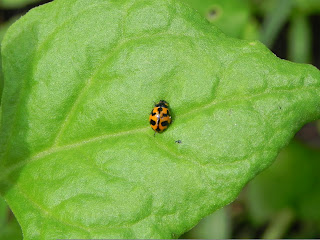 Not to confused of course with the 24 spot beetle who has also taken up residence.
And then there are just all the other bugs in general.

 Somehow, nature just finds it's own balance.


And as the rain had settled into a pattern of overnight showers and beautiful days, everything in the garden blossomed and thrived, including the bugs. Bad bugs, but they also herald the arrival of good bugs, and some bugs, I'm not really sure where they fit in.
 |
| A lone caterpillar on my mandarin tree. |
 |
| Another Citrus loving caterpillar on my tangerine. This was the only one, sitting high enough the chooks couldn't reach it. |
 |
| Someones been eating my tomatoes... |
 |
| And brought along way too many friends.... |
 |
| Moving onto the rosellas as well |
 |
| And yet another type on the lone sunflower that escaped my weeding |

 |
| Gobbling the flowers on my white choko. Hopefully they are fertislising as they go and leave enough flower to fruit. |

And my best little bug eaters are also out in force

Monday, April 1, 2013
Welcoming Alice and Wendy
Alice and Wendy arrived yesterday morning. I had no idea how they should be settled in. Would they be like dogs, would they try to run away, could they wander off and get lost. To be safe I put them in their temporary pen, our old chook house, just to let them have time to settle down and get a sense of their new surrounds. About lunchtime they were looking really calm, they had been wandering around the pen eating grass, digging, looking for bugs and had eaten some of their food and had water. I figured that was the sign that they had accepted their move, so we opened the door and let them out to free range around the garden. My other girls were already wandering around, but hadn't paid any particular attention to these new arrivals other than a brief glance through the cage. Things were a little different once they were out however. Alice and Wendy are much bigger than any of the other girls and were not in a socialable mood at all. Every time one of the girls came anywhere near them they puffed up and chased them away. I expected that there would be some confrontation, as the newcomers would mean a shuffle of the groups heirachy, but after the first few tries, the two camps remained separated. As I wanted to ensure they had sorted the bickering before they were penned together they spent the night separated as well. Today they all spent the day in the garden, there were a couple of small altercations, but still no unity. So tonight we are still in two separate chook houses and I'm wondering if there will ever be harmony in the garden again.
If you've integrated new chickens with existing I'd love to hear how you did it, any suggestions at all are very very welcome.
 |
| Alice and Wendy settling in the old chook pen. |
 |
| Alice would only lay in a special box before, but she's taken to the lawn mower catcher already. Two eggs waiting for us there this morning. |
Saturday, March 30, 2013
A special Easter gift
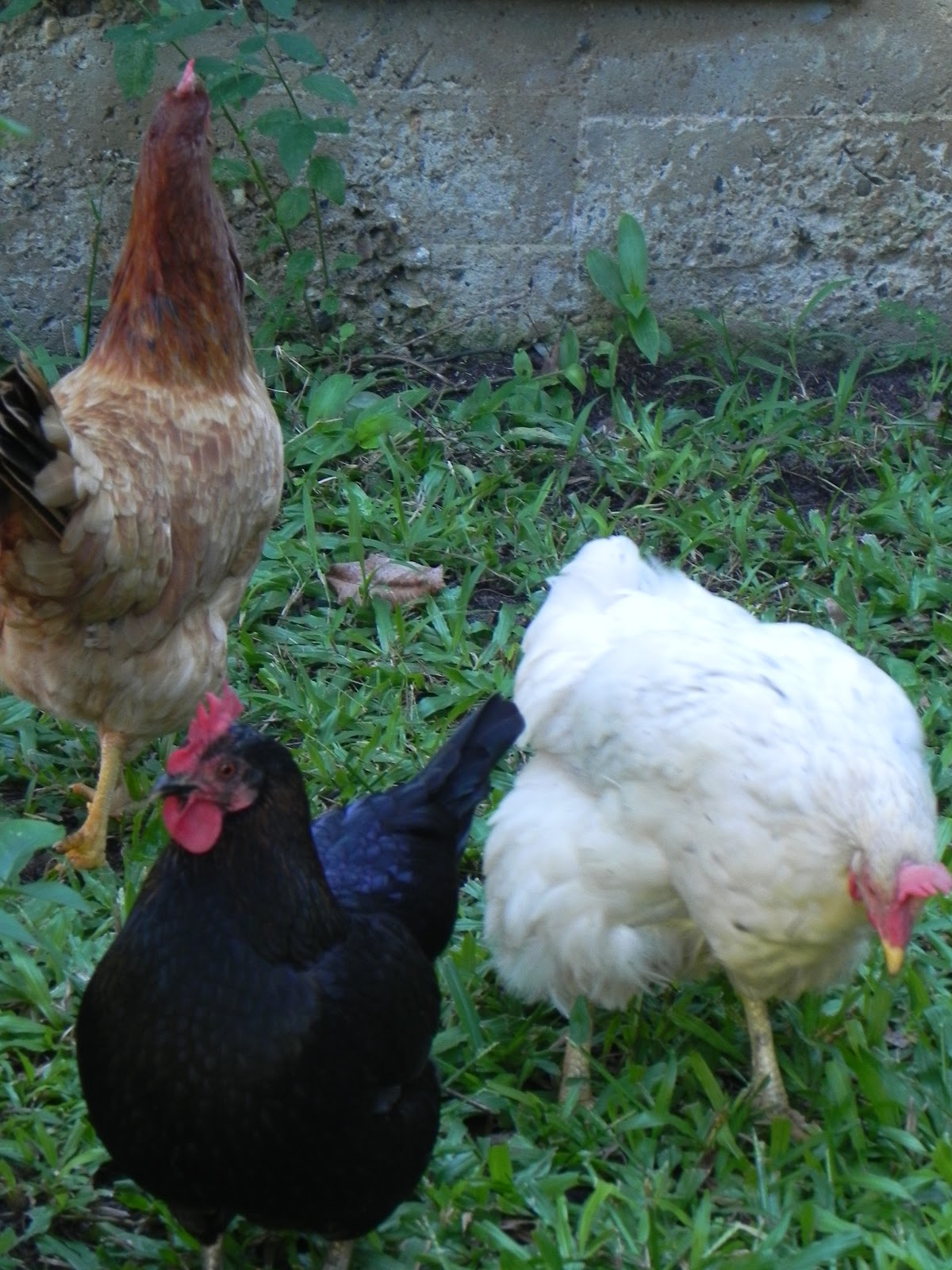
I've had my beautiful girls, Naughty, Henrietta, Larry and Buffy since just after Christmas 3 years ago. They have been a wonderful part of the change my little blue shack has brought for me. My original plan for them was to be willing workers, clearing the ground of grass and weeds, allowing me to establish garden beds, eating bugs, and in general being of service in my garden. Little did I realise how many contented hours would be spent with a cup of tea in hand, just watching them roam about the garden. It's been a relevation to me in so many ways, from a naive start(I didn't think for one second they'd eat plants, in retrospect, how stupid was I) until today, they have been an incredible source of learning and company.


Well, today I welcome two new girls, Alice and Wendy. I haven't met them yet, but feel like it's a meant to be thing. I met their current owner a couple of weeks ago. She had overheard me talking with hubby about it being time to move the chook house again and mentioned she needed to move soon and was looking for someone to give her two girls a home.
When I first investigated the idea of having chickens, I had thoughts of keeping about 10. The chook houses are both designed large enough to take this number in comfort, but I was contented with the four I first introduced. If you're wondering how I arrived at four instead of 10 it's because I got overwhelmed making the choice of which ones I would have from a large assortment. I ended up with a white one (Naughty, named by my niece and nephews because apparently that's all they heard me saying to it for the first few days!!!), a brown one, Larry, as she was always on her own at first, a peach one, Buffy, named after the vampire slayer as she is always the protective one when it comes to other birds entering their space, and lastly Henrietta, the baby (bantam) who is black. Four different colours so I could tell them apart. I had always intended to introduce a new chicken each year and slowly add to my little flock. I hadn't done this yet. After seeing the four girls in action, I don't think my garden could survive more than 6 anyways, so I've held off waiting for the right opportunity. I didn't know how old each of the girls were when I first got them, or if they'd even lay. Originally all the girls would lay an egg each every day or so, which was a bonus over their required work duties in the garden, but they've slowed down now. And I had been contemplating getting the extras because now I've been spoilt with our own girls eggs, I hate eating store bought eggs.
And so fate has had a hand and this morning I'll be welcoming two more girls to our little family. I'm excited and anxious all at the same time, I hope everyone will get along, I hope my girls will accept them and they'll be happy in their new home too. Only time will tell.


Well, today I welcome two new girls, Alice and Wendy. I haven't met them yet, but feel like it's a meant to be thing. I met their current owner a couple of weeks ago. She had overheard me talking with hubby about it being time to move the chook house again and mentioned she needed to move soon and was looking for someone to give her two girls a home.
When I first investigated the idea of having chickens, I had thoughts of keeping about 10. The chook houses are both designed large enough to take this number in comfort, but I was contented with the four I first introduced. If you're wondering how I arrived at four instead of 10 it's because I got overwhelmed making the choice of which ones I would have from a large assortment. I ended up with a white one (Naughty, named by my niece and nephews because apparently that's all they heard me saying to it for the first few days!!!), a brown one, Larry, as she was always on her own at first, a peach one, Buffy, named after the vampire slayer as she is always the protective one when it comes to other birds entering their space, and lastly Henrietta, the baby (bantam) who is black. Four different colours so I could tell them apart. I had always intended to introduce a new chicken each year and slowly add to my little flock. I hadn't done this yet. After seeing the four girls in action, I don't think my garden could survive more than 6 anyways, so I've held off waiting for the right opportunity. I didn't know how old each of the girls were when I first got them, or if they'd even lay. Originally all the girls would lay an egg each every day or so, which was a bonus over their required work duties in the garden, but they've slowed down now. And I had been contemplating getting the extras because now I've been spoilt with our own girls eggs, I hate eating store bought eggs.
And so fate has had a hand and this morning I'll be welcoming two more girls to our little family. I'm excited and anxious all at the same time, I hope everyone will get along, I hope my girls will accept them and they'll be happy in their new home too. Only time will tell.
Subscribe to:
Posts (Atom)